


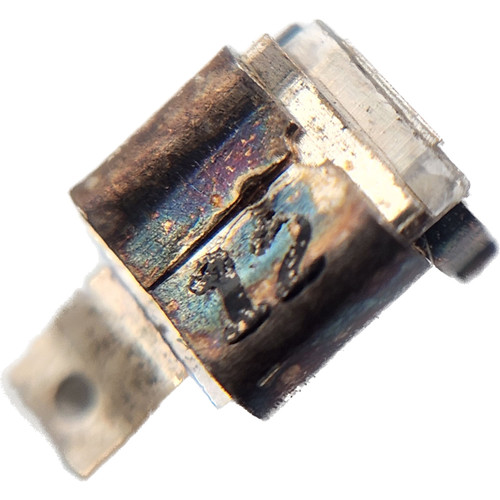
Premium Metal-Clad Mica Capacitor for High-Power RF Applications
The Motorola 2180240G20 is a precision metal-clad mica capacitor specifically engineered for high-power RF applications in Motorola two-way radio transmitters. This component features 12 picofarads capacitance with the exceptional stability, ultra-low loss characteristics, and high Q factor that only natural mica dielectric can provide. Metal-clad mica capacitors represent the premium choice for RF power amplifier tank circuits, transmitter output matching networks, and high-voltage RF applications where ceramic capacitors would be inadequate. The robust metal enclosure provides electromagnetic shielding, mechanical protection, and efficient heat dissipation critical for high-power operation.
Key Features
- Genuine Motorola component ensures reliable performance in high-power RF transmitters
- 12 picofarad capacitance ideal for RF power amplifier tuning and matching networks
- Natural mica dielectric provides exceptional temperature stability and near-zero aging
- Metal-clad construction offers superior heat dissipation for high RF current applications
- Ultra-low dissipation factor ensures minimal power loss at RF frequencies
- Extremely high Q factor (typically >10,000) maintains sharp circuit resonance
- Rugged construction withstands high RF voltages and currents in transmitter circuits
Technical Specifications
- Motorola Part Number: 2180240G20
- Component Type: Metal-Clad Mica Capacitor
- Capacitance: 12 pF (picofarads)
- Tolerance: Typically ±1% to ±5% for mica capacitors
- Dielectric Type: Natural Mica (Muscovite)
- Temperature Coefficient: Typically +50 to +200 ppm/°C (positive coefficient)
- Operating Temperature Range: -55°C to +125°C (or higher depending on construction)
- Dissipation Factor: <0.03% at RF frequencies (exceptionally low loss)
- Q Factor: >10,000 at 1 MHz (ultra-high quality factor)
- Voltage Rating: Typically 500V to 2500V DC depending on construction
- RF Current Handling: Superior current capacity due to metal cladding and heat dissipation
- Insulation Resistance: >100,000 MΩ minimum
- Mounting Style: Through-hole with mounting bracket
Compatible Radio Models
This component is used in various Motorola portable and mobile two-way radio transmitter circuits, particularly in high-power RF sections including final power amplifier tank circuits, impedance matching networks, harmonic suppression filters, and transmitter output coupling stages. Metal-clad mica capacitors are specified where high RF power levels, elevated voltages, and demanding stability requirements exceed the capabilities of ceramic capacitors. Consult your radio's service manual or contact a Motorola authorized service center for specific compatibility and circuit location information.
What's Included
- One (1) Motorola 2180240G20 Metal-Clad Mica Capacitor
Applications
- RF power amplifier output tank circuits and tuning networks
- Transmitter final stage impedance matching and harmonic filtering
- High-power RF coupling circuits between amplifier stages
- Antenna tuning units (ATUs) and impedance matching networks
- Transmitter output lowpass filters for harmonic suppression
- High-voltage RF bypass and DC blocking applications
- RF power measurement and directional coupler circuits
Installation and Service Notes
Professional installation by qualified radio technicians with RF transmitter experience is mandatory. Metal-clad mica capacitors in transmitter circuits operate at high RF voltages and currents, requiring specialized knowledge and safety precautions. Required tools include temperature-controlled soldering station with appropriate tip (typically larger chisel tip for thermal mass), needle-nose pliers or precision tweezers with insulated handles, high-wattage solder (sufficient thermal capacity for metal cladding), rosin-core solder, no-clean flux, desoldering braid or vacuum desoldering tool, and appropriate fasteners for mechanical mounting. RF test equipment including RF power meter, SWR meter, spectrum analyzer, and frequency counter are essential for post-installation verification.
Before beginning work, ensure the radio is powered off and disconnected from all power sources and antennas. Transmitter circuits can retain high voltages on capacitors and in tank circuits even after power removal. Use a proper discharge tool to safely discharge all high-voltage points before handling. Document the original component orientation, connection points, and any adjustment settings (variable capacitors in the same circuit) before removal, as these may require restoration during reinstallation and alignment.
Removal procedure: Desolder all connection points using appropriate technique for the mounting style. Metal-clad capacitors have significant thermal mass and may require higher soldering iron temperature (400°C) and longer heating time than standard components. Use desoldering braid or vacuum desoldering tool to remove excess solder and ensure clean removal without pad damage. If mechanically fastened, remove mounting hardware carefully, noting hardware configuration for reinstallation. Inspect the PCB area and surrounding components for signs of thermal damage, discoloration, or carbonization indicating previous overheating or failure.
Installation procedure: Clean all connection pads and mounting surfaces thoroughly with isopropyl alcohol. Position the new capacitor in the exact location and orientation of the original component. If mechanical mounting is required, install mounting hardware finger-tight before soldering to ensure proper alignment. Solder all electrical connections using sufficient heat and solder to create robust joints capable of handling RF currents. The metal cladding acts as a heat sink, so adequate iron temperature and heating time are essential for proper solder flow and wetting. After soldering, tighten any mechanical fasteners to secure the component against vibration. Inspect all solder joints under magnification for proper fillet formation, complete wetting, and absence of cold joints or solder bridges.
This capacitor is typically replaced during troubleshooting of transmitter failures including reduced output power, inability to tune transmitter to specification, excessive harmonic emissions, high SWR indicating impedance mismatch, transmitter instability or self-oscillation, or visible damage to the capacitor (cracking, discoloration, carbonization). In high-power transmitter circuits, capacitor failure can cause significant damage to RF power transistors, which are expensive and may be difficult to obtain. Always inspect RF power devices and associated circuitry when replacing transmitter capacitors.
After installation, comprehensive transmitter alignment and RF testing are mandatory. This work requires calibrated RF test equipment and must be performed by technicians trained in transmitter alignment procedures. Adjust the affected circuit (typically tank circuit or matching network) according to the radio's service manual alignment procedure to restore proper tuning. Verify transmitter output power meets specification across the full frequency range, SWR is acceptable (typically <1.5:1), harmonic and spurious emissions are suppressed below regulatory limits (-70 dBc typical for Part 90 radios), and transmitter current consumption is within normal parameters. Use a spectrum analyzer to verify spectral purity and absence of spurious signals. Thermal imaging during extended transmit testing can identify components operating excessively hot, indicating circuit problems or improper adjustment.
Never substitute metal-clad mica capacitors with ceramic capacitors, even with identical capacitance values. Ceramic capacitors lack the power-handling capability, voltage rating, Q factor, and thermal stability required for high-power transmitter applications. Only use genuine Motorola metal-clad mica capacitors or equivalent components from reputable RF component manufacturers with verified specifications. Generic substitutions will result in degraded transmitter performance, potential component damage, or regulatory compliance failures due to inadequate harmonic suppression.
Mica capacitors exhibit virtually no aging, minimal temperature coefficient, and exceptional stability over their operating life. However, mechanical damage, thermal cycling beyond specifications, or operation at excessive RF power levels can cause delamination of the mica layers or breakdown of the dielectric. Always replace with components having equal or superior specifications, and never exceed the original component's voltage and current ratings.
This component is intended exclusively for service by Motorola authorized service centers, professional radio technicians with transmitter alignment training and proper RF test equipment, and experienced RF engineers. Transmitter work requires specialized knowledge, expensive calibrated test equipment (RF power meter, spectrum analyzer, frequency counter, SWR meter), and understanding of FCC Part 90 regulatory requirements. Improper transmitter repair or alignment can result in excessive spurious emissions violating FCC regulations, potential interference to other radio services, damage to expensive RF power components, and safety hazards from high RF voltages.
Manufacturer Part Number: 2180240G20
Description: Metal-Clad Mica Capacitor, 12pF, High-Power RF
Dielectric Type: Natural Mica (Muscovite)
Construction: Metal-Clad with Mounting Bracket
Application: RF Power Amplifier Tuning, Transmitter Tank Circuits, High-Power RF
Service Level: Professional Transmitter Technician Required