

High-Capacitance X7R Ceramic Capacitor for Power Supply and Decoupling Applications
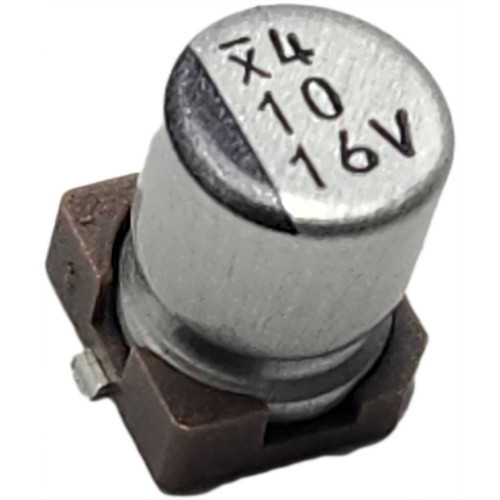
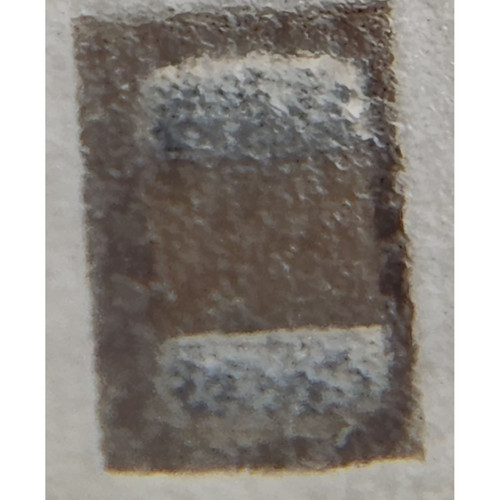
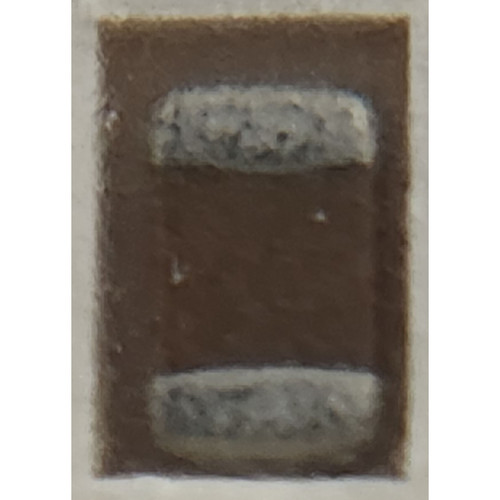
The Motorola 2113955E37 is a high-capacitance ceramic chip capacitor designed for power supply filtering, decoupling, and bulk energy storage in Motorola two-way radio circuits. This component features 10 microfarads capacitance in a compact 1210 surface mount package, combining the high capacitance density of X7R dielectric with the reliability and temperature stability required for professional radio equipment. The 16V DC rating provides adequate voltage margin for typical radio power supply voltages (3.7V lithium-ion batteries, 7.5V or 13.8V DC operation), while the ±10% tolerance ensures predictable circuit performance. Operating across the full -55°C to +125°C temperature range, this capacitor is suitable for demanding environments.
Key Features
- Genuine Motorola component ensures reliable performance in professional radio equipment
- 10 microfarads capacitance provides substantial bulk energy storage and filtering
- 16V DC voltage rating suitable for typical radio power supply applications
- X7R dielectric offers stable capacitance with ±15% variation over full temperature range
- ±10% capacitance tolerance ensures predictable power supply and decoupling performance
- 1210 (3.2mm × 2.5mm) surface mount package balances capacitance with board space
- Wide operating temperature range -55°C to +125°C for harsh environment applications
Technical Specifications
- Motorola Part Number: 2113955E37
- Component Type: Multilayer Ceramic Chip Capacitor (MLCC)
- Capacitance: 10 µF (microfarads)
- Tolerance: ±10% (K tolerance code)
- Rated Voltage: 16V DC
- Dielectric Type: X7R - Class II High-Dielectric Ceramic
- Operating Temperature Range: -55°C to +125°C
- Temperature Coefficient: ±15% capacitance change over full temperature range
- Dissipation Factor: Typically 2.5% maximum at 1 kHz
- Insulation Resistance: >10,000 MΩ or 100 GΩ-µF (whichever is less)
- Package Size: 1210 (3.2mm × 2.5mm / 0.126" × 0.098")
- Package Height: Typically 2.0-2.5mm maximum
- Mounting Style: Surface mount chip capacitor
Compatible Radio Models
This component is used in various Motorola portable and mobile two-way radio models, particularly in power supply circuits including voltage regulator input/output filtering, battery power conditioning, DC-DC converter smoothing, audio amplifier power supply decoupling, and logic circuit bulk decoupling. The 10µF capacitance makes this an ideal bulk capacitor for low-dropout (LDO) regulators and switching power supply output stages. Consult your radio's service manual or contact a Motorola authorized service center for specific compatibility and circuit location information.
What's Included
- One (1) Motorola 2113955E37 Ceramic Chip Capacitor
Applications
- Voltage regulator input and output bulk filtering and stabilization
- DC-DC converter output smoothing and ripple reduction
- Battery power supply filtering and transient suppression
- Audio amplifier power supply decoupling for noise reduction
- Digital logic circuit bulk decoupling and power conditioning
- RF power amplifier bias circuit filtering and stabilization
- Microcontroller and DSP power supply decoupling networks
Installation and Service Notes
Professional installation by qualified radio technicians with surface mount soldering experience is required. This 1210-size capacitor is larger than typical chip components and requires appropriate handling and soldering techniques. Required tools include temperature-controlled soldering station with chisel or conical tip (350°C maximum temperature), precision tweezers or vacuum pickup tool rated for larger components, fine-diameter solder wire (0.5-0.8mm) or solder paste, no-clean flux formulated for SMD work, and magnification equipment (5-10x minimum). The work area must be ESD-protected with proper grounding, as electrostatic discharge can damage the dielectric and cause latent failures or immediate shorts.
Surface mount installation procedure: Clean PCB pads thoroughly with 99% isopropyl alcohol using lint-free wipes and allow complete evaporation. Inspect pads under magnification for oxidation, contamination, or damage. Apply minimal no-clean flux to both pads. Orient the capacitor correctly (non-polarized component, either orientation acceptable) and position precisely ensuring the component body is centered on the pads. Tack-solder one end first by applying iron tip to the pad-to-termination junction while feeding minimal solder to create a proper fillet, maintaining contact for 2-3 seconds maximum. Due to the larger thermal mass of this 1210 component, slightly longer heating time may be necessary compared to smaller packages. Allow 5-10 seconds cooling time, then solder the opposite end using the same technique. Inspect both solder joints under magnification for proper concave fillet formation extending from pad to component termination, complete wetting without cold joints, and absence of solder bridges or excessive flux residue.
This capacitor is typically replaced during troubleshooting of power supply issues including excessive ripple voltage on power rails, voltage regulator instability or oscillation, inadequate transient response causing voltage droop during load changes, increased power supply noise affecting audio quality or RF performance, or complete power supply failure. Visual inspection may reveal cracking, delamination, or discoloration indicating thermal stress or dielectric breakdown. Electrical testing with a capacitance meter will reveal open circuits, short circuits, or significant capacitance degradation (more than 20% deviation from nominal value). Equivalent Series Resistance (ESR) testing can identify degraded capacitors that still measure correct capacitance but have elevated internal resistance causing poor filtering performance.
After installation, verify proper circuit operation including correct DC voltage levels on all power rails, acceptable ripple voltage (typically <50mV peak-to-peak for logic circuits, <10mV for sensitive analog circuits), stable voltage regulation under varying load conditions, and absence of oscillation or instability. Use an oscilloscope to observe power supply transient response during transmit key-up, which creates sudden high current demands. The power supply voltage should remain within specification (typically ±5% regulation) during these transient events. Measure current consumption to ensure it matches expected values - excessive current may indicate a short circuit or other failure. Use thermal imaging or contact temperature measurement to verify the capacitor is not overheating during operation, which would indicate excessive ripple current or circuit problems.
Never substitute this component with capacitors having lower voltage ratings, even with identical capacitance values. While 16V may seem generous for typical radio voltages, the voltage rating must account for peak voltages, transients, and component derating (typically operated at 50-80% of rated voltage for reliability). X7R dielectric is appropriate for this application due to its balance of capacitance density and stability. Do not substitute with Y5V or Z5U dielectrics which have poor temperature stability, significant voltage coefficients (capacitance decreases dramatically under applied DC voltage), and are unsuitable for power supply applications. Always use genuine Motorola parts or equivalent capacitors from reputable manufacturers (Murata, TDK, Samsung, Kemet, AVX) with verified specifications matching voltage rating, capacitance, temperature range, and package size.
X7R dielectric exhibits some DC bias effect where capacitance decreases as DC voltage is applied. At 16V rated voltage, a 10µF X7R capacitor may experience 20-40% capacitance loss when operated near its full voltage rating. This is normal behavior for X7R dielectric and is factored into the circuit design. However, when operating at typical radio voltages (3-14V), the capacitance loss will be minimal (typically 10-20%). For applications requiring more stable capacitance under DC bias, consider using C0G/NP0 dielectric (available only in much lower capacitance values) or using multiple capacitors in parallel.
This component is intended for service by Motorola authorized service centers, professional radio technicians, and experienced electronics repair specialists. While surface mount soldering of 1210 components is more forgiving than smaller packages, proper technique and equipment remain essential for reliable repairs. The relatively high capacitance value and X7R dielectric make this component suitable for general power supply and decoupling applications where bulk energy storage is required.
Manufacturer Part Number: 2113955E37
Description: Ceramic Chip Capacitor, 10µF, 16V DC, X7R, ±10%, 1210 Package
Dielectric Type: X7R Class II High-Dielectric Ceramic
Package Size: 1210 (3.2mm × 2.5mm) Surface Mount
Temperature Range: -55°C to +125°C
Application: Power Supply Filtering, Bulk Decoupling, Voltage Regulator Support