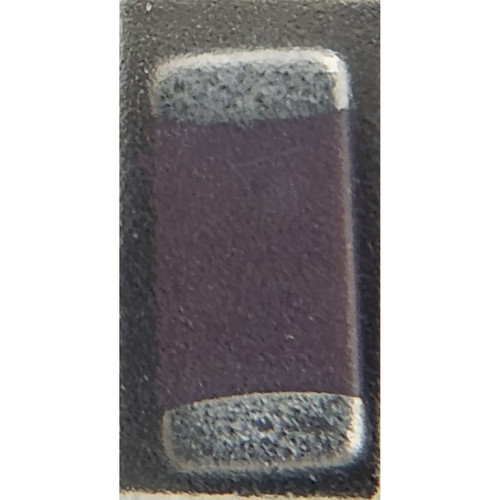


Precision Class 1 Ceramic Capacitor for Temperature-Critical RF Applications
The Motorola 2113740A39 is a precision Class 1 (NPO/C0G) ceramic chip capacitor engineered for demanding RF applications in Motorola two-way radio circuits. This component features 27 picofarad capacitance with an ultra-tight ±30 ppm/°C temperature coefficient, providing exceptional stability across the full operating temperature range. Class 1 ceramic dielectrics are the gold standard for frequency-determining circuits where even minimal capacitance drift would compromise radio performance and regulatory compliance. The 27pF value is commonly used in crystal oscillator load capacitance, VCO tuning, and RF matching networks where precision and stability are paramount.
Key Features
- Genuine Motorola component ensures exact specifications for original equipment performance
- 27 picofarad capacitance ideal for crystal oscillator loading and RF tuning applications
- Class 1 NPO/C0G dielectric delivers exceptional temperature stability (±30 ppm/°C maximum)
- Tighter tolerance than standard ±100 ppm NPO capacitors for critical frequency circuits
- Ultra-low dissipation factor minimizes signal loss in high-frequency applications
- High Q factor maintains sharp resonance characteristics in filter and oscillator circuits
- Stable capacitance over frequency, voltage, and time with near-zero aging rate
Technical Specifications
- Motorola Part Number: 2113740A39
- Component Type: Multilayer Ceramic Chip Capacitor (MLCC)
- Capacitance: 27 pF (picofarads)
- Tolerance: Typically ±1 pF or ±5% (whichever is greater) for Class 1 types
- Dielectric Type: Class 1 NPO (C0G) - Temperature-Compensating Ceramic
- Temperature Coefficient: ±30 ppm/°C maximum (precision grade)
- Operating Temperature Range: -55°C to +125°C
- Rated Voltage: Typically 50V to 100V DC for this capacitance range
- Dissipation Factor: <0.1% at 1 MHz (ultra-low loss)
- Insulation Resistance: >10,000 MΩ minimum
- Q Factor: >1000 at 1 MHz (high quality factor)
- Aging Rate: Essentially zero (Class 1 characteristic)
Compatible Radio Models
This component is used in various Motorola portable and mobile two-way radio models, particularly in precision frequency-control circuits including crystal oscillators, voltage-controlled oscillators (VCOs), frequency synthesizers, and temperature-compensated reference circuits. The tight ±30 ppm/°C specification indicates this capacitor is specified for applications where frequency stability directly affects regulatory compliance and channel spacing accuracy. Consult your radio's service manual or contact a Motorola authorized service center for specific compatibility and circuit location details.
What's Included
- One (1) Motorola 2113740A39 Class 1 Ceramic Chip Capacitor
Applications
- Crystal oscillator load capacitance for reference frequency generation
- Voltage-controlled oscillator (VCO) tuning and linearization circuits
- Phase-locked loop (PLL) synthesizer temperature compensation networks
- RF impedance matching networks requiring temperature stability
- Transmitter carrier frequency stabilization circuits
- Receiver local oscillator precision tuning
- Temperature-critical timing and frequency reference applications
Installation and Service Notes
Professional installation by qualified radio technicians with surface mount or through-hole soldering experience and RF alignment capability is mandatory. This precision capacitor requires a temperature-controlled soldering station with appropriate tip (350°C maximum temperature), precision tweezers or needle-nose pliers for component handling, fine-diameter rosin-core solder (0.5-0.8mm) or solder paste for surface mount types, no-clean flux formulated for electronic assembly, and magnification equipment (10-20x minimum) for inspection. The work area must be ESD-protected with proper grounding, anti-static mat, and grounded wrist strap, as electrostatic discharge can degrade capacitor dielectric properties and cause intermittent or latent failures.
Installation procedure varies by mounting style. For surface mount types: thoroughly clean PCB pads with 99% isopropyl alcohol and allow complete evaporation. Apply minimal no-clean flux to both pads. Position the capacitor precisely (non-polarized, either orientation acceptable) using vacuum pickup or precision tweezers. Tack-solder one end first by applying iron tip to pad while feeding minimal solder, maintaining contact for 2 seconds maximum. Allow 5 seconds cooling, then solder the opposite end. For through-hole types: insert leads through properly sized holes, ensure component is flush against PCB, bend leads slightly to hold in place, solder from component side using minimal solder to create concave fillets, and trim excess lead length leaving 1-2mm. Inspect all joints under magnification for proper fillet formation, adequate wetting, and absence of cold joints, solder bridges, or flux residue.
This capacitor is typically replaced during troubleshooting of frequency-related issues including transmitter frequency drift exceeding FCC tolerance (±2.5 ppm for narrowband systems), receiver frequency instability causing adjacent channel interference, synthesizer phase noise degradation, failure to maintain frequency accuracy across temperature extremes, or intermittent frequency errors during thermal cycling. In crystal oscillator circuits, incorrect load capacitance (even 1-2pF deviation) can shift the operating frequency by several parts per million, potentially causing the radio to operate outside its licensed frequency allocation. The ±30 ppm/°C temperature coefficient is significantly tighter than standard ±100 ppm NPO capacitors, indicating this component is reserved for the most demanding frequency-stability applications.
After installation, comprehensive RF testing and alignment are required. Use a calibrated frequency counter with ±0.1 ppm accuracy minimum (laboratory-grade preferred) to verify transmit and receive frequencies. Perform temperature cycling tests by measuring frequency at -20°C, +25°C, and +60°C minimum to confirm proper frequency stability across the operating range (many service centers use thermal chambers for this verification). For transmitter circuits, verify output power meets specification, modulation characteristics are correct (±12.5 kHz deviation for FM narrowband, ±5 kHz for digital), and spurious emissions are suppressed below -70 dBc. Document all measurements in the radio's maintenance record with date, technician identification, and test equipment calibration dates.
Never substitute this component with standard NPO capacitors having wider temperature coefficients (±100 ppm or greater), X7R capacitors (±15% capacitance change), or other dielectric types. Such substitutions will compromise frequency stability and may cause the radio to fail FCC type acceptance requirements or violate Part 90 frequency tolerance specifications. Always use the exact Motorola part number to ensure identical electrical characteristics, parasitic properties, and temperature performance. Generic capacitors with "similar" specifications may have different Q factors, series resistance, or parasitic inductance that affect RF circuit performance.
This component is intended for service by Motorola authorized service centers, professional radio technicians with RF alignment equipment, and experienced electronics repair specialists. Required test equipment includes: frequency counter or service monitor with ±0.1 ppm accuracy, RF power meter (0.1 dB accuracy), spectrum analyzer (for spurious emission verification), modulation meter (0.1 kHz accuracy for deviation measurements), and ideally a temperature chamber for thermal cycling verification. Due to the critical nature of frequency stability in licensed two-way radio systems and FCC compliance requirements, end-user installation without proper test equipment is not recommended.
Manufacturer Part Number: 2113740A39
Description: Class 1 Ceramic Chip Capacitor, 27pF, NPO/C0G, ±30ppm/°C
Dielectric Type: Class 1 NPO (C0G) Temperature-Compensating
Temperature Coefficient: ±30 ppm/°C (Precision Grade)
Application: Crystal Oscillator Load, VCO Tuning, Precision RF Circuits